

How to Clean Diamond Rings to Restore Their Sparkle
The quickest and safest way to bring back that sparkle at home is a simple soak. Just pop your ring into a bowl of warm water with a few drops of mild dish soap for about 20-30 minutes. Afterwards, gently brush away any lingering grime with a brand-new, baby-soft toothbrush, paying close attention to the nooks and crannies around the setting. A final rinse under warm running water and a pat dry with a lint-free cloth is all it takes to cut through that everyday buildup.
Why Your Diamond Ring Loses Its Sparkle
That incredible, fiery brilliance you first fell in love with is all about how your diamond plays with light. When light enters the stone, it bounces around the internal facets, creating that unmistakable shimmer. But the things we do every day can quickly get in the way of that beautiful light show.
It’s a little-known fact, but diamonds are naturally oleophilic—a fancy way of saying they attract oil and grease. This property turns your beautiful stone into a magnet for all sorts of residues from products you use daily.
Just think about your routine:
- Beauty and Skincare: Hand creams, soaps, makeup, and even hairspray can leave behind a thin, almost invisible film.
- Natural Oils: Your own skin produces oils that transfer to the ring band and diamond every time you touch it.
- Everyday Grime: Dust, dirt, and tiny particles from the environment love to get trapped in the setting, especially right under the diamond.
Over time, these layers build up into a cloudy film that coats your diamond's surface. This suffocating layer stops light from getting into the stone and, just as importantly, from reflecting back out. The result? Even the most exquisitely cut diamond can start to look dull, flat, and lifeless.
Restoring Your Ring’s Brilliance
Understanding why your ring looks dull is the key to bringing it back to life. Cleaning is about more than just wiping off a bit of dust; it’s about completely dissolving that greasy film that’s killing its sparkle. It’s a common frustration, and keeping rings clean is a priority for many. A recent survey even found that rings are the most frequently cleaned piece of jewellery, with 43% of Canadians making it their top priority.
The truth is, a dirty diamond doesn't sparkle because light can't get in or out. Regular, gentle cleaning is the single most effective way to maintain the fire, brilliance, and scintillation that define your diamond's character.
A good at-home cleaning routine does more than just make your ring look pretty. It’s the perfect opportunity to give it a quick inspection. You can check for things like a loose prong or signs of wear on the band before they become bigger problems. A well-maintained ring isn't just stunning—it's also more secure.
After all, the brilliant symmetry of a stunning cut, like a 4-arrow oval diamond, can only be truly appreciated when it's perfectly clean. By learning how to care for your ring properly, you're preserving both its beauty and its priceless sentimental value for a lifetime.
Gathering Your Gentle Cleaning Toolkit
Before we dive into the how-to, let's get our supplies in order. You'll be happy to know that making your diamond ring sparkle again doesn't call for any expensive or hard-to-find equipment. In fact, you probably have everything you need already. The trick isn't what you use, but choosing the right versions of these simple household items to ensure a safe, brilliant clean.
Think of it this way: you wouldn't wash a silk blouse with harsh laundry detergent. The same principle applies here. We need agents that are tough on grime but incredibly gentle on your ring's precious metal and delicate setting.
The Perfect Cleaning Solution
The star of the show is surprisingly simple: mild dish soap. The key is to grab a clear formula without any dyes, fragrances, or heavy moisturizers. Those additives can leave a filmy residue behind, which is exactly what we're trying to get rid of.
A quality, grease-cutting dish soap is designed to break down oils, which is the main reason your diamond looks dull in the first place. It effortlessly lifts away the daily buildup from hand creams, natural skin oils, and dirt without being abrasive. A few drops in a bowl of warm water is all you need to create the perfect soak.
The Essential Brushing Tool
Next, you'll need a brand-new, baby-soft toothbrush. And when I say brand new, I mean it—it's crucial this brush has never seen a drop of toothpaste. Toothpaste contains fine abrasives that are great for tooth enamel but can easily create tiny scratches on the surface of gold or platinum, dulling its shine over time.
This dedicated, ultra-soft brush will let you gently work into all the little nooks and crannies—like underneath the diamond and around the prongs—without risking any damage to the setting. It’s perfect for dislodging any stubborn bits of debris that a cloth just can't reach.
What to Strictly Avoid
Knowing what not to use is just as important as having the right tools. There are plenty of DIY cleaning "hacks" floating around online that can cause serious, irreversible damage to your ring.
When it comes to your ring, a simple, gentle approach is always the safest and most effective. The risk of using harsh chemicals or abrasives just isn't worth it.
Here are the absolute no-gos for cleaning your diamond ring:
- Harsh Chemicals: Steer clear of chlorine bleach, acetone (nail polish remover), and other aggressive household cleaners. They can corrode the alloys in your gold setting, causing discolouration and even weakening the prongs over time.
- Abrasive Materials: Things like toothpaste, baking soda, or powdered cleansers are far too gritty. While a diamond is tough, the metal band is not, and these will scratch it.
- At-Home Ultrasonic Cleaners: Professionals use ultrasonic machines, but only after a thorough inspection to ensure every stone is secure. The intense vibrations from consumer-grade models can easily shake small diamonds loose, especially from delicate pavé or channel settings. It's a risk best avoided.
The Professional At-Home Cleaning Method
With your gentle cleaning toolkit assembled, you're ready to bring back your diamond's incredible sparkle. This is the method most gemologists, myself included, trust for safe and effective at-home care. It's designed to meticulously lift away the daily buildup of oils and grime without putting your precious ring at risk.
The whole process is quite simple, but paying close attention to the details—like water temperature and soaking time—makes a world of difference. Think of it as a restorative spa treatment for your ring, meant to revive that brilliant, fresh-from-the-jeweller look.
The visualization below outlines the core components of your cleaning process, highlighting the simple yet essential tools for a brilliant result.
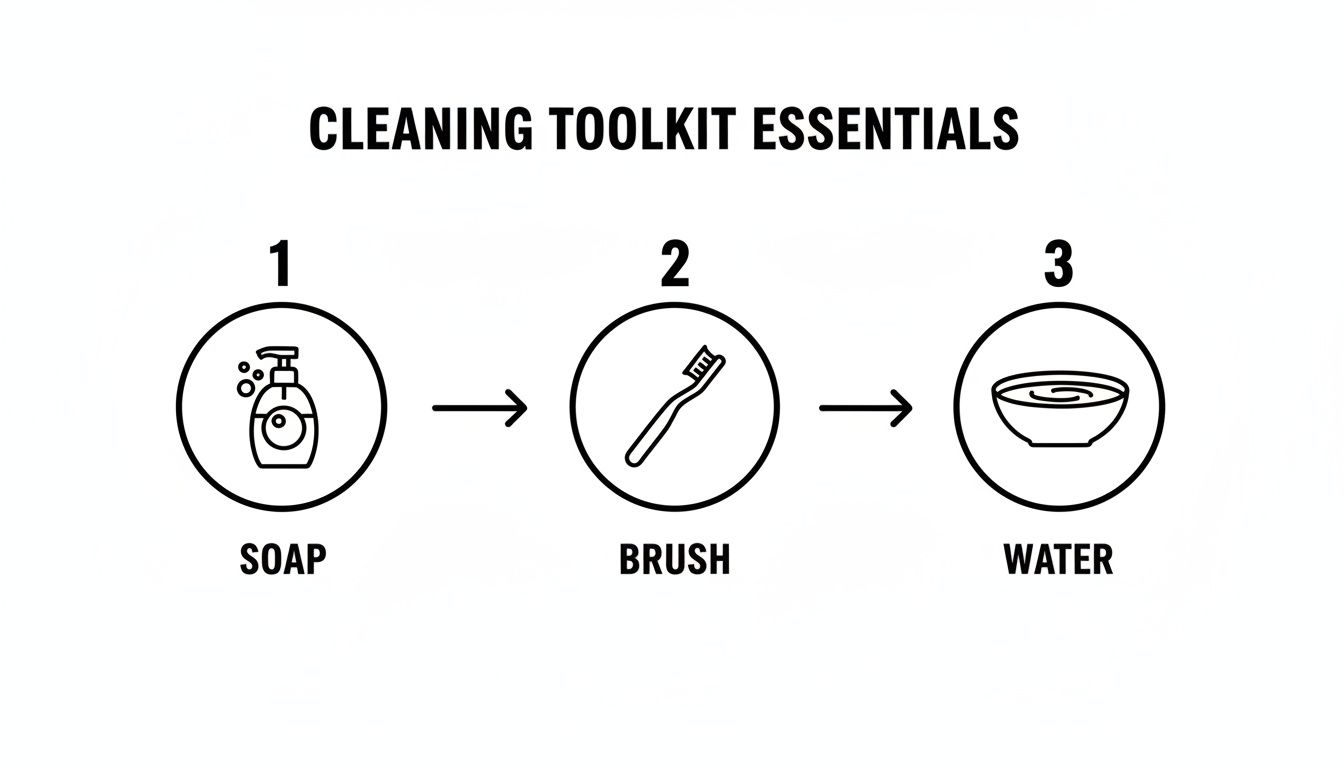
This process shows that a professional-quality clean really just relies on three fundamentals: a gentle soap, a soft brush, and clean water.
Prepare the Soaking Solution
First things first, let's create a simple yet powerful cleaning bath. Grab a small bowl—a teacup or ramekin is perfect—and fill it with warm water. Getting the temperature right is key here; you want it warm enough to be comfortable to the touch, like a warm bath, but never hot or boiling. Extreme heat can cause thermal shock to the diamond and may damage or discolour certain precious metals over time.
Now, add just a few drops of your mild, clear dish soap. Swirl it gently with your finger to create a light, sudsy solution. The goal is a gentle degreasing bath, not a mountain of bubbles. This simple mixture is more than enough to start breaking down the oily residue that's dulling your diamond’s fire.
The Art of the Soak
Next, carefully place your diamond ring into the bowl and just let it soak. Patience is your best friend at this stage. You’ll want to let the ring sit undisturbed for about 20 to 30 minutes. This soaking time is crucial; it gives the soap solution a chance to work its way into all the tiny crevices and dissolve the stubborn buildup from lotions, hairspray, and skin oils.
While your ring is soaking, take a moment to prep your sink for the rinsing step. A simple but vital safety measure is to close the sink drain completely. It's a tiny action that has saved countless rings from a disastrous trip down the pipes.
The Gentle Brushing Technique
After a good soak, it’s time to dislodge any lingering grime. Take your ring out of the solution and hold it securely. Using your dedicated, baby-soft toothbrush, begin to gently scrub the ring. The keyword here is gently. You aren't trying to scour a pan; you're performing a very delicate cleaning.
Focus your attention on the areas where dirt loves to hide:
- Underneath the diamond: This is the most critical spot, as grime here directly blocks light from returning through the top of the stone, which is what creates sparkle.
- Around the prongs: Clean the base and sides of each prong holding the diamond in place.
- Within the setting: If you have a more intricate design, like a pavé or halo setting, use the softest touch to clean between the tiny stones.
This careful brushing lifts away the softened debris without ever scratching the metal band. It’s the most hands-on part of how to clean diamond rings effectively.
Rinsing Away the Residue
Once you've finished brushing, the next step is to rinse the ring thoroughly. Hold it under a stream of warm running water, rotating it slowly to ensure every bit of soap is washed away. Any leftover soap residue will dry to a dull film, undoing all your hard work.
Keep rinsing until the ring feels completely clean and is no longer slippery to the touch. It’s a common mistake to rush the rinse, so give it an extra 10-15 seconds just to be certain.
The secret to a truly brilliant finish lies in the rinse. A perfectly clean, residue-free surface allows light to enter and exit the diamond without any interference, maximizing its natural fire and sparkle.
Even with meticulous home care, professional cleanings are still essential. Deciding between a DIY clean and a trip to the jeweller often comes down to the level of buildup and the type of equipment needed.
At-Home vs Professional Diamond Cleaning Methods
| Feature | At-Home Cleaning | Professional Cleaning |
|---|---|---|
| Tools Used | Soft brush, mild soap, warm water, microfibre cloth. | Ultrasonic cleaners, high-pressure steam, polishing wheels. |
| Effectiveness | Excellent for removing daily grime, oils, and lotion buildup. | Removes deeply embedded dirt, sanitizes, and can polish out minor scratches on the metal. |
| Best For | Regular maintenance to keep the ring sparkling between professional visits. | Deep cleaning, pre-event sparkle, and routine inspection of prongs and settings. |
| Frequency | Once every 1-2 weeks for rings worn daily. | Recommended at least twice a year, or as needed for heavy buildup. |
This table shows that while at-home cleaning is your best friend for regular upkeep, nothing replaces the deep clean a professional can provide with specialized tools.
This at-home soak is your best first line of defence. GIA's Carlsbad protocol confirms that a 20-minute soak in mild soap and warm water can cut dullness by 50% for the 1.5 million ring-wearers in Canada. For more advice, you can explore expert tips about maintaining your diamond's shine on revediamonds.com.
Drying for a Spotless Finish
The final step is just as important as the first. To dry your ring, grab a soft, clean, lint-free cloth. A microfibre cloth, like one you'd use for eyeglasses, is the perfect choice. Gently pat the ring dry, being extra careful not to snag the prongs on the fabric.
I'd advise against using paper towels or tissues for this. They can leave behind tiny fibres that get caught in the setting and, believe it or not, can be slightly abrasive on the metal. A proper drying technique ensures you won't have any water spots, leaving a flawless, brilliantly sparkling finish. Once it's dry, your diamond ring is ready to catch the light again.
Special Care for Different Settings and Metals
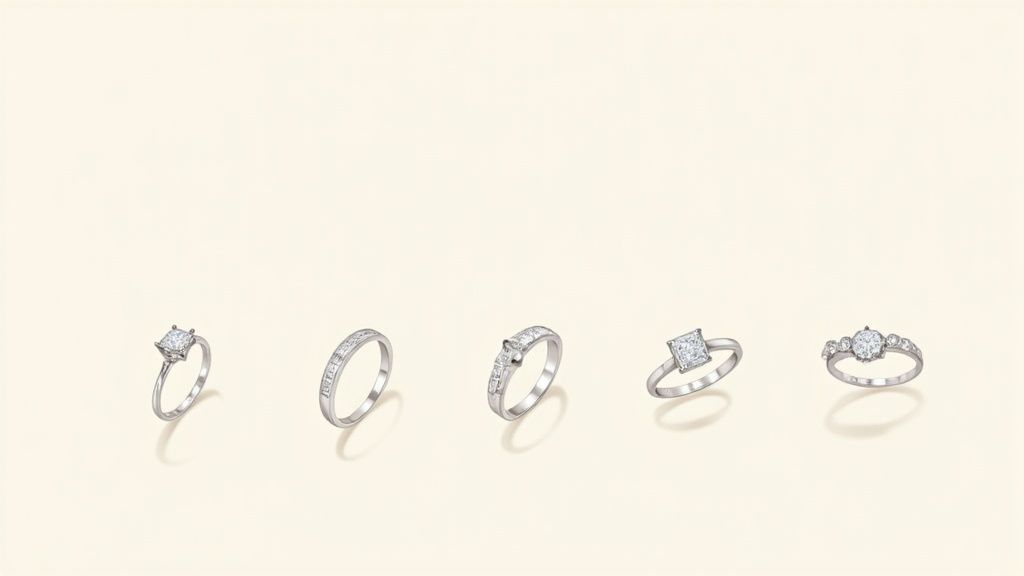
While a simple soap and water soak is a wonderfully safe starting point for most diamond rings, it's not a one-size-fits-all solution. The unique architecture of your ring—from the way the stones are set to the metal itself—calls for a more considered approach. Tailoring your technique is the key to protecting the ring's integrity while bringing back that brilliant shine.
Delicate and intricate settings, for example, need an extra-gentle touch. The very details that make them so stunning also create perfect hiding spots for dirt, lotions, and debris. Knowing how to handle these subtleties makes all the difference.
Cleaning Rings with Intricate Settings
Rings with pavé, channel, or halo settings are covered in tiny diamonds, creating a breathtaking, continuous sparkle. But all those small crevices are magnets for grime. Cleaning them properly is all about precision and a light hand.
Your soft-bristled brush is your best friend here, but you have to use it with the lightest pressure imaginable. Think delicate, deliberate strokes. Scrubbing too aggressively can loosen the tiny prongs or shared metal beads holding those small stones in place.
When it comes to delicate settings like pavé or channel, the goal is to dislodge, not scrub. Let the warm, soapy water do the heavy lifting to break down the grime. Your brush is just there to gently flick away what's been loosened.
Tension settings, where the diamond is held in place by the pressure of the band itself, present their own unique challenge. Debris can get wedged in the tiny gap between the diamond and the metal. Be extra careful when brushing here to avoid snagging a bristle. If you want to dive deeper into how these designs are constructed, this engagement ring styles guide is a fantastic resource that details the nuances of each setting.
Adapting to Different Precious Metals
The band is just as important as the diamond it holds. Every precious metal has its own character, and your cleaning method should respect that to maintain its lustre for years to come.
Platinum is a powerhouse—incredibly durable and dense, making it highly resistant to damage from a gentle cleaning. You can confidently use the standard soap and water method without worrying much about scratching or wear. Its naturally white sheen won't fade or change colour.
Yellow and rose gold are also quite tough, but they're inherently softer than platinum. This is why using an ultra-soft brush is so important. Stiff bristles or abrasive materials can create micro-scratches on the surface, which build up over time and dull the finish.
White gold demands the most specific care of all. To get that bright, silvery-white look, white gold is plated with a thin layer of rhodium, a metal from the platinum family. This plating can, and will, wear away over time from friction and chemical exposure.
To protect the rhodium plating on your white gold ring, keep these points in mind:
- Be Exceptionally Gentle: Use only the softest brush and the absolute minimum pressure when cleaning.
- Avoid Harsh Chemicals: Stick to mild dish soap. Anything stronger can speed up the erosion of the rhodium plating.
- Limit Polishing: Don't go overboard with polishing cloths. The mild abrasives in them can wear down the plating faster than you'd think.
Eventually, any white gold ring will need to be re-plated by a jeweller to restore its brilliant white finish. Careful at-home cleaning simply extends the time between those professional visits, keeping your ring looking its best for longer.
While your diligent at-home cleanings are perfect for keeping that everyday sparkle alive, there are times when a simple soak and scrub just won't be enough. A professional jeweller brings a level of deep cleaning and—more importantly—a detailed inspection that you simply can't replicate at home. It’s essential for the long-term health and security of your ring.
Think of it like a bi-annual check-up for your most cherished piece of jewellery. Professionals have specialized tools that can safely blast away deeply embedded grime that at-home methods leave behind, restoring your diamond’s brilliance to that just-bought, breathtaking state.
The Power of Professional Equipment
When you hand your ring over to a trusted jeweller, they usually have a one-two punch for getting it immaculately clean. First up is the ultrasonic cleaner. This machine uses high-frequency sound waves to create microscopic bubbles in a cleaning solution, which gently but firmly knock stubborn dirt loose from every tiny crevice.
After that, they’ll often use a high-pressure steam cleaner. This final step blasts away any remaining oils and dislodged debris, leaving the diamond and metal surfaces completely sanitized. The result is a level of sparkle that’s hard to achieve on your own, bringing out the true fire and life of your stone.
A professional cleaning is more than just cosmetic—it's preventative maintenance. The security of your diamond depends on the integrity of its setting, and only a trained eye can spot potential problems before they turn into heartbreaking losses.
Knowing when to seek this expert care is key. If you notice a persistent dullness despite your best efforts, or if your ring has been exposed to heavy buildup from things like thick lotions, baking, or gardening, it’s definitely time for a visit.
Beyond the Sparkle: An Essential Security Check
Honestly, the most critical reason to see a jeweller isn’t just for the shine. It’s for the inspection that comes with it.
While your ring is in their hands, an expert will meticulously examine every part of it under magnification. This is a vital service that truly protects your investment.
During this inspection, a jeweller is looking for:
- Loose Prongs: Daily wear and tear can cause prongs to bend or lift ever so slightly. They'll check each one for tightness to make sure your diamond is held securely.
- Signs of Wear: They’ll spot thinning metal on the band or prongs, which happens naturally over many years but needs to be addressed before it compromises the ring's strength.
- Stone Security: For rings with delicate pavé or channel-set stones, they will check that none of the tiny diamonds have come loose.
- Overall Integrity: They’ll assess the entire ring structure for any hairline cracks or other signs of stress that could lead to bigger problems down the road.
This expert evaluation can catch minor issues before they become major, costly repairs or, worse, the loss of a stone. For anyone in Canada who has invested in a custom piece from a studio like Design by Sevan, that peace of mind is invaluable.
Many jewellers even offer this service as part of a lifetime care plan. In a bustling market like California’s wedding industry, major chains report providing free lifetime cleaning services to over 85% of their diamond ring customers. This leads to an average of 3.2 professional cleanings per ring annually, which really shows how crucial this service is. You can learn more about what's involved by reading about Zales' cleaning and inspection services on zales.com.
Ultimately, committing to a professional check-up once or twice a year is the single best thing you can do to ensure your beautiful ring stays both secure and brilliant for a lifetime.
Common Questions on Diamond Ring Care
Even with a great at-home cleaning routine, you'll probably still have questions about the finer points of keeping your diamond ring in pristine condition. Getting clear, expert answers is the absolute best way to protect your treasured piece for a lifetime. Let's tackle some of the most common concerns I hear from clients, from cleaning frequency to the safety of certain products.
Getting these details right helps you shift from simply cleaning your ring to truly caring for it. The goal is to build simple, confident habits that keep your diamond brilliant and your setting secure, helping you sidestep common mistakes before they ever happen.
How Often Should I Clean My Diamond Ring at Home?
For a ring you wear daily, a gentle at-home cleaning once every one to two weeks is perfect. This is frequent enough to prevent the buildup of lotions, oils, and everyday grime that can quickly cloud a diamond’s sparkle. Think of it this way: consistent, gentle cleanings are far more effective and safer for your ring than letting the buildup get so bad that you have to resort to aggressive scrubbing.
If you have a particularly active job, spend a lot of time outdoors, or are a big fan of rich hand creams, you might find a quick weekly clean is what it takes to maintain that "just from the jeweller" look. The real key is consistency.
A weekly or bi-weekly cleaning routine does more than just maintain sparkle. It gives you a regular moment to quickly inspect your ring for anything that looks off, like a prong that might seem a tiny bit crooked. This proactive habit is a cornerstone of long-term jewellery care.
What Household Products Should I Never Use?
Knowing what to avoid is just as crucial as knowing what to use. I've seen firsthand how certain common household products can cause irreversible damage to a ring's precious metal or even the diamond itself. It's critical to keep these items far away from your jewellery.
You should never, ever use:
- Harsh Chemicals: Things like chlorine bleach, acetone (nail polish remover), and other strong household cleaners can react with and corrode the alloys in gold. This can lead to permanent discolouration and, over time, can actually weaken the metal.
- Abrasive Materials: Toothpaste, baking soda, and any kind of powdered cleanser are far too abrasive. While diamonds are incredibly hard, these substances will create thousands of microscopic scratches on the gold or platinum band, slowly dulling its beautiful polished finish.
- Acidic Solutions: You might see tips online suggesting things like vinegar, but it's best to avoid it. Its acidic nature can be harsh on the delicate alloys in some precious metals and can even damage certain porous gemstones if your ring has them.
The simple, time-tested method of mild, dye-free dish soap and warm water remains the gold standard for a reason—it's effective and completely safe.
Are Store-Bought Jewellery Cleaners Safe?
Many commercial jewellery cleaning solutions are perfectly safe and work well, but you have to read the label carefully before you buy or use one. Make sure the product is explicitly formulated for use on diamonds and your ring's specific metal, whether that's platinum, yellow gold, or rhodium-plated white gold.
Some cleaners contain ingredients like ammonia, which is a powerful degreaser but can be too harsh for certain treated gemstones or antique rings with delicate settings. If your ring includes other gems besides diamonds, this is an even more important consideration. When in doubt, the mild soap and water method is always the safest bet. For more detailed guidance, our comprehensive tips and FAQ page offers additional expert advice.
Is It Safe to Use a Home Ultrasonic Cleaner?
Frankly, we strongly advise against using at-home ultrasonic cleaners. While we professionals use these machines for a deep clean, we always perform a thorough inspection first to ensure every single stone and prong is secure.
The intense, high-frequency vibrations from a home unit can easily loosen or even shake out small diamonds, especially from delicate pavé, channel, or tension settings. It's a significant risk that simply isn't worth taking with something as precious as your engagement ring. Leave the ultrasonic cleaning to the professionals, who have the tools and expertise to ensure your ring's safety before and after the process.
At Design by Sevan, we believe that caring for your bespoke ring should be as thoughtful as its creation. We are dedicated to providing the guidance you need to keep your one-of-a-kind piece sparkling for a lifetime.
Begin your custom jewellery journey with a free consultation today.